Buy work-shop.eu ?
We are moving the project
work-shop.eu .
Are you interested in purchasing the domain
work-shop.eu ?
domain@kv-gmbh.de · 0541-91531010
Buy work-shop.eu ?
When do you use "dont" in French?
"Dont" is used in French to indicate possession or to replace the preposition "de" followed by a noun. It is used when the noun being replaced is the object of the verb in the relative clause. For example, "La fille dont j'ai parlé" (The girl I talked about) or "Le livre dont tu as besoin" (The book you need). **
Is there a difference between dont and duquel?
Yes, there is a difference between "dont" and "duquel" in French. "Dont" is used to indicate possession or relationship and is equivalent to "whose" or "of which" in English. For example, "le livre dont je t'ai parlé" means "the book that I told you about." On the other hand, "duquel" is a relative pronoun that is used to refer to a specific noun with a preposition, such as "le livre duquel je t'ai parlé" meaning "the book about which I told you." So, while both words are used to introduce relative clauses, they are used in different contexts and have different meanings. **


Similar search terms for Dont
Top-Angebote
Products related to Dont:
-
HARPERCOLLINS Lifespan: Why We Age and Why We Dont Have ToLifespan - Why We Age and Why We Dont Have To Description In this paradigm-shifting book from acclaimed Harvard Medical School doctor and one of TIME magazine's 100 most influential people on earth; Dr. David Sinclair reveals that everything we think we know about ageing is wrong; and shares the surprising; scientifically-proven methods that can help readers live younger; longer. For decades; the medical community has looked to a variety of reasons for why we age; and the consensus is that no one dies of old age; they die of age-related diseases. That's because ageing is not a disease - it is inevitable. But what if everything you think you know about ageing is wrong?What if ageing is a disease? And that disease is curable. In LIFESPAN; Dr. David Sinclair; one of the world's foremost authorities on genetics and ageing; argues just that. He has dedicated his life's work to chasing more than a longer lifespan - he wants to enable people to live longer; healthier; and disease-free well into our hundreds. In this book; he reveals a bold new theory of ageing; one that pinpoints a root cause of ageing that lies in an ancient genetic survival circuit. This genetic trick - a circuit designed to halt reproduction in order to repair damage to the genome -has enabled earth's early microcosms to survive and evolve into more advanced organisms. But this same survival circuit is the reason we age: as genetic damage accumulates over our lifespans from UV rays; environmental toxins; and unhealthy diets; our genome is overwhelmed; causing gray hair; wrinkles; achy joints; heart issues; dementia; and; ultimately; death. But genes aren't our destiny; we have more control over them than we've been taught to believe. We can't change our DNA; but we can harness the power of the epigenome to realise the true potential of our genes. Drawing on his cutting-edge findings at the forefront of medical research; Dr. Sinclair will provide a scientifically-proven roadmap to reverse the genetic clock by activating our vitality genes; so we can live younger longer. Readers will discover how a few simple lifestyle changes - like intermittent fasting; avoiding too much animal protein; limiting sugar; avoiding x-rays; exercising with the right intensity; and even trying cold therapy - can activate our vitality genes. Dr. Sinclair ends the book with a look to the near future; exploring what the world might look like - and what will need to change - when we are all living well to 120 or more. Dr. Sinclair takes what we have long accepted as the limits of human potential and mortality and turns them into choices. THE EVOLUTION OF AGEING is destined to be the biggest book on genes; biology; and longevity of this decade.7,95 £*Shipping: 2,99 £Secure redirect to the provider
-
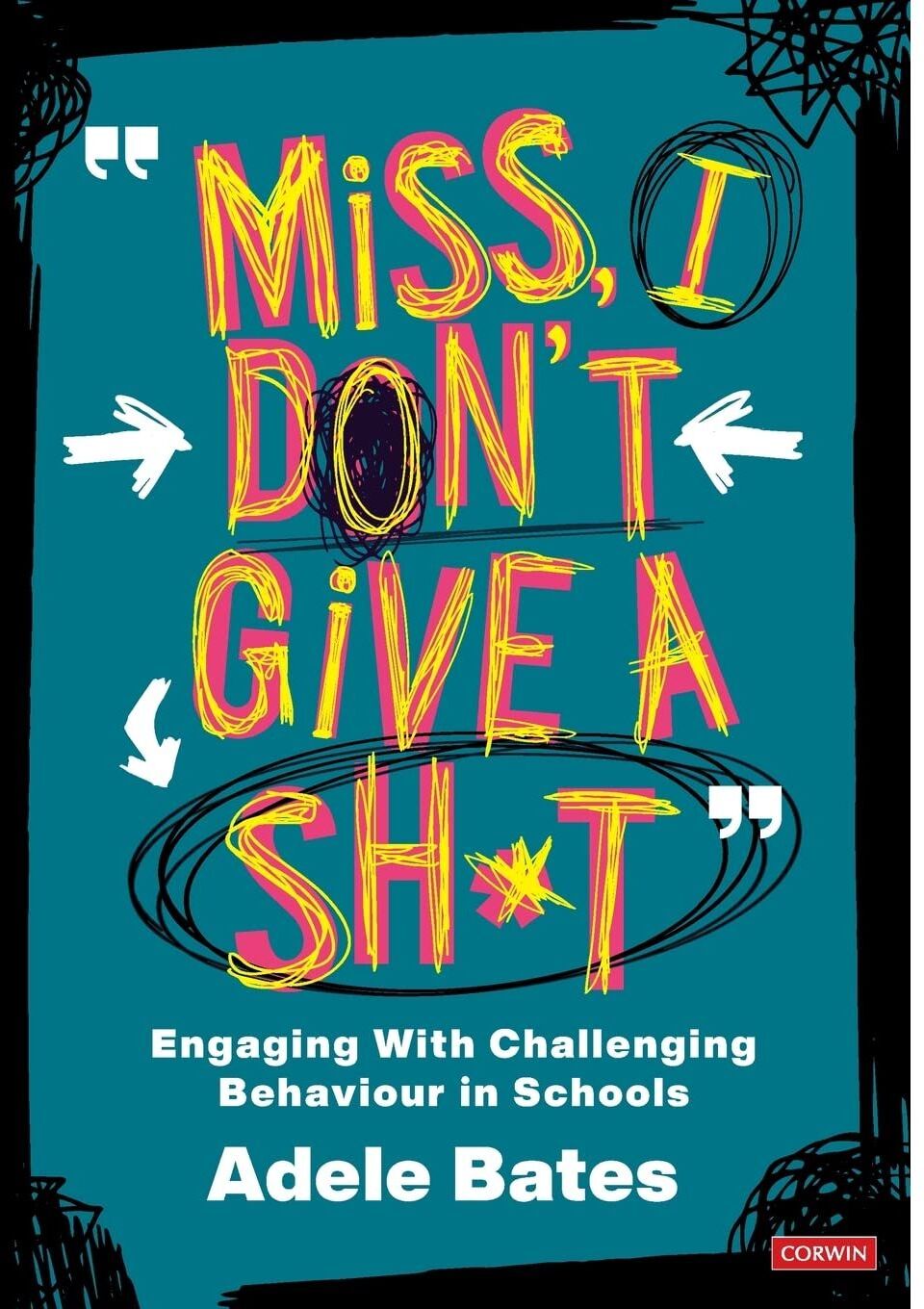
SAGE Publications Miss, I dont give a sh*t : Engaging with challenging behaviour in schoolsDo you want to be an inspiring teacher for everyone you teach, even the trickier cherubs in your class? Or maybe you just want to get through a lesson without a desk flying at you or a blazer being set alight? In this down-to-earth book Adele Bates shares practical approaches, strategies and tips from the classroom on how to help pupils with behavioural needs thrive with their education. Packed full of real-life classroom scenarios, student voice and relevant theory, every chapter offers an Action Box helping you to implement these strategies – next lesson, next week and long term. From relationship building and teaching self-regulation, to fostering inclusivity, paying attention to your own self-care and schoolwide approaches, Adele Bates unpicks some of the most difficult aspects of being a teacher and empowers you to grow as a confident classroom professional.15,69 £*Shipping: 2,99 £Secure redirect to the provider
-
Plus Size Women's Georgette Buttonfront Tie Sleeve Cafe Blouse by Catherines in Dont Use (Size 5X)Our #1 best-selling georgette blouse is loved for its light, airy feel and effortless polish. This buttonfront blouse drapes beautifully and is perfect for weekdays to weekends all year long.FABRIC: Lightweight, breathable georgette fabric has a...37,99 $*Shipping: 0,00 $Secure redirect to the provider
-
Plus Size Women's Georgette Buttonfront Tie Sleeve Cafe Blouse by Catherines in Dont Use (Size 0X)Our #1 best-selling georgette blouse is loved for its light, airy feel and effortless polish. This buttonfront blouse drapes beautifully and is perfect for weekdays to weekends all year long.FABRIC: Lightweight, breathable georgette fabric has a...37,99 $*Shipping: 0,00 $Secure redirect to the provider



-
Which French relative pronouns are there: lequel or dont?
The French relative pronouns "lequel" and "dont" both serve different purposes. "Lequel" is used to refer to a specific noun and has different forms depending on the gender and number of the noun it refers to. On the other hand, "dont" is used to indicate possession or to introduce a relative clause with verbs that require the preposition "de." Both pronouns are important for constructing complex sentences and adding specificity to the language. **
-
What is the difference between "dont" and "duquel" in French?
In French, "dont" and "duquel" are both relative pronouns used to introduce a clause that provides additional information about a noun. However, "dont" is used to replace "de + qui/que" and is used when the main verb requires the preposition "de." On the other hand, "duquel" is used to replace "de + lequel/laquelle/lesquels/lesquelles" and is used when the main verb requires the preposition "de" and the noun is masculine singular or plural. In summary, "dont" is used to replace "de + qui/que" and "duquel" is used to replace "de + lequel/laquelle/lesquels/lesquelles." **
-
Which of them (de laquelle, duquel or dont) is grammatically correct?
The correct choice depends on the gender and number of the noun it refers to. "De laquelle" is used for feminine singular nouns, "duquel" is used for masculine singular nouns, and "dont" is used for both masculine and feminine singular or plural nouns. It's important to match the relative pronoun with the noun it refers to in terms of gender and number. **
-
Can you help me with the French relative pronouns lequel and dont?
Of course! The relative pronoun "lequel" is used to refer to a previously mentioned noun and can be masculine, feminine, singular, or plural. It has different forms depending on the gender and number of the noun it refers to. On the other hand, "dont" is used to replace "de + noun" and is used to indicate possession or relationship. It is used to connect a main clause to a subordinate clause. I can provide more specific examples or help with any other questions you may have about these relative pronouns. **


When do we use ce qui, ce que, qui, que, dont, and lequel?
We use "ce qui" when the subject of the verb is unknown or unspecified. "Ce que" is used when the object of the verb is unknown or unspecified. "Qui" is used as the subject of the verb, while "que" is used as the direct object of the verb. "Dont" is used to indicate possession or relationship, and "lequel" is used to refer to a specific noun that has been previously mentioned. **
"Apply despite lack of craftsmanship skills?"
Yes, it is possible to apply for a job or opportunity even if you lack craftsmanship skills. Many employers are willing to provide training and on-the-job experience to individuals who show potential and a willingness to learn. Highlighting any related skills, such as attention to detail, problem-solving abilities, or a strong work ethic, can also help demonstrate your potential for success in a craftsmanship role. Additionally, taking the initiative to learn and improve your skills independently can show your dedication and commitment to the craft. **
Top-Angebote
Products related to Dont:
-
Make Brilliant Work: Lessons on Creativity, Innovation, and Success by Rod JudkinsDescription. Condition: BRAND NEW. Format: Paperback. Make Brilliant Work is an inspiring guide to unlocking your creative potential, showing you the methods and techniques that will transform your efforts and help you achieve your best ever work.. You don’t have to be brilliant to produce brilliant work. Many of the characters you will meet in this book failed at school, lacked natural talent, were not especially gifted or were repeatedly sacked. But their methods produced brilliant work – and they will work for you, too. Make Brilliant Work is the essential book from Rod Judkins, author of the international bestseller The Art of Creative Thinking.. Whatever your creative endeavour, you might find it hard to produce something significant and important. The real-life heroes in this book will show you how to make the transformation from ordinary to extraordinary. From Frida Kahlo to Steve Jobs, and star architect Zaha Hadid: the figures in Make Brilliant Work will show you how to think for yourself, take risks and persevere to create brilliant work.. Title. Make Brilliant Work: Lessons on Creativity, Innovation, and Success by Rod Judkins. Delivery. Content. Reviews2,49 £*Shipping: 2,99 £Secure redirect to the provider
-
Pan Make Brilliant Work: Lessons on Creativity, Innovation and Success by Rod Judkins - Paperback - Self-Help/Business Creativity Guide, Author ofMake Brilliant Work is an inspiring guide by Rod Judkins, drawing on the real-life stories of visionaries from Frida Kahlo to Steve Jobs. This paperback book reveals the methods and mindsets that turn ordinary effort into extraordinary results. Judkins proves that talent alone never guaranteed success — persistence, risk-taking and original thinking did. A motivating read for anyone wanting to unlock their creative potential at work or in life. The book profiles figures who failed at school, were told they lacked talent, or were fired more than once, yet went on to achieve great things. Written by Rod Judkins, published by Pan Macmillan, this book is a reassuring truth: you don't have to be naturally brilliant to produce brilliant work.2,99 £*Shipping: 2,99 £Secure redirect to the provider
-
HARPERCOLLINS Lifespan: Why We Age and Why We Dont Have ToLifespan - Why We Age and Why We Dont Have To Description In this paradigm-shifting book from acclaimed Harvard Medical School doctor and one of TIME magazine's 100 most influential people on earth; Dr. David Sinclair reveals that everything we think we know about ageing is wrong; and shares the surprising; scientifically-proven methods that can help readers live younger; longer. For decades; the medical community has looked to a variety of reasons for why we age; and the consensus is that no one dies of old age; they die of age-related diseases. That's because ageing is not a disease - it is inevitable. But what if everything you think you know about ageing is wrong?What if ageing is a disease? And that disease is curable. In LIFESPAN; Dr. David Sinclair; one of the world's foremost authorities on genetics and ageing; argues just that. He has dedicated his life's work to chasing more than a longer lifespan - he wants to enable people to live longer; healthier; and disease-free well into our hundreds. In this book; he reveals a bold new theory of ageing; one that pinpoints a root cause of ageing that lies in an ancient genetic survival circuit. This genetic trick - a circuit designed to halt reproduction in order to repair damage to the genome -has enabled earth's early microcosms to survive and evolve into more advanced organisms. But this same survival circuit is the reason we age: as genetic damage accumulates over our lifespans from UV rays; environmental toxins; and unhealthy diets; our genome is overwhelmed; causing gray hair; wrinkles; achy joints; heart issues; dementia; and; ultimately; death. But genes aren't our destiny; we have more control over them than we've been taught to believe. We can't change our DNA; but we can harness the power of the epigenome to realise the true potential of our genes. Drawing on his cutting-edge findings at the forefront of medical research; Dr. Sinclair will provide a scientifically-proven roadmap to reverse the genetic clock by activating our vitality genes; so we can live younger longer. Readers will discover how a few simple lifestyle changes - like intermittent fasting; avoiding too much animal protein; limiting sugar; avoiding x-rays; exercising with the right intensity; and even trying cold therapy - can activate our vitality genes. Dr. Sinclair ends the book with a look to the near future; exploring what the world might look like - and what will need to change - when we are all living well to 120 or more. Dr. Sinclair takes what we have long accepted as the limits of human potential and mortality and turns them into choices. THE EVOLUTION OF AGEING is destined to be the biggest book on genes; biology; and longevity of this decade.7,95 £*Shipping: 2,99 £Secure redirect to the provider
-
SAGE Publications Miss, I dont give a sh*t : Engaging with challenging behaviour in schoolsDo you want to be an inspiring teacher for everyone you teach, even the trickier cherubs in your class? Or maybe you just want to get through a lesson without a desk flying at you or a blazer being set alight? In this down-to-earth book Adele Bates shares practical approaches, strategies and tips from the classroom on how to help pupils with behavioural needs thrive with their education. Packed full of real-life classroom scenarios, student voice and relevant theory, every chapter offers an Action Box helping you to implement these strategies – next lesson, next week and long term. From relationship building and teaching self-regulation, to fostering inclusivity, paying attention to your own self-care and schoolwide approaches, Adele Bates unpicks some of the most difficult aspects of being a teacher and empowers you to grow as a confident classroom professional.15,69 £*Shipping: 2,99 £Secure redirect to the provider
-
When do you use "dont" in French?
"Dont" is used in French to indicate possession or to replace the preposition "de" followed by a noun. It is used when the noun being replaced is the object of the verb in the relative clause. For example, "La fille dont j'ai parlé" (The girl I talked about) or "Le livre dont tu as besoin" (The book you need). **
-
Is there a difference between dont and duquel?
Yes, there is a difference between "dont" and "duquel" in French. "Dont" is used to indicate possession or relationship and is equivalent to "whose" or "of which" in English. For example, "le livre dont je t'ai parlé" means "the book that I told you about." On the other hand, "duquel" is a relative pronoun that is used to refer to a specific noun with a preposition, such as "le livre duquel je t'ai parlé" meaning "the book about which I told you." So, while both words are used to introduce relative clauses, they are used in different contexts and have different meanings. **
-
Which French relative pronouns are there: lequel or dont?
The French relative pronouns "lequel" and "dont" both serve different purposes. "Lequel" is used to refer to a specific noun and has different forms depending on the gender and number of the noun it refers to. On the other hand, "dont" is used to indicate possession or to introduce a relative clause with verbs that require the preposition "de." Both pronouns are important for constructing complex sentences and adding specificity to the language. **
-
What is the difference between "dont" and "duquel" in French?
In French, "dont" and "duquel" are both relative pronouns used to introduce a clause that provides additional information about a noun. However, "dont" is used to replace "de + qui/que" and is used when the main verb requires the preposition "de." On the other hand, "duquel" is used to replace "de + lequel/laquelle/lesquels/lesquelles" and is used when the main verb requires the preposition "de" and the noun is masculine singular or plural. In summary, "dont" is used to replace "de + qui/que" and "duquel" is used to replace "de + lequel/laquelle/lesquels/lesquelles." **
Similar search terms for Dont
-
Plus Size Women's Georgette Buttonfront Tie Sleeve Cafe Blouse by Catherines in Dont Use (Size 5X)Our #1 best-selling georgette blouse is loved for its light, airy feel and effortless polish. This buttonfront blouse drapes beautifully and is perfect for weekdays to weekends all year long.FABRIC: Lightweight, breathable georgette fabric has a...37,99 $*Shipping: 0,00 $Secure redirect to the provider
-
Plus Size Women's Georgette Buttonfront Tie Sleeve Cafe Blouse by Catherines in Dont Use (Size 0X)Our #1 best-selling georgette blouse is loved for its light, airy feel and effortless polish. This buttonfront blouse drapes beautifully and is perfect for weekdays to weekends all year long.FABRIC: Lightweight, breathable georgette fabric has a...37,99 $*Shipping: 0,00 $Secure redirect to the provider
-
Plus Size Women's Georgette Buttonfront Tie Sleeve Cafe Blouse by Catherines in Dont Use (Size 1X)Our #1 best-selling georgette blouse is loved for its light, airy feel and effortless polish. This buttonfront blouse drapes beautifully and is perfect for weekdays to weekends all year long.FABRIC: Lightweight, breathable georgette fabric has a...37,99 $*Shipping: 0,00 $Secure redirect to the provider
-
Plus Size Women's Georgette Buttonfront Tie Sleeve Cafe Blouse by Catherines in Dont Use (Size 2X)Our #1 best-selling georgette blouse is loved for its light, airy feel and effortless polish. This buttonfront blouse drapes beautifully and is perfect for weekdays to weekends all year long.FABRIC: Lightweight, breathable georgette fabric has a...37,99 $*Shipping: 0,00 $Secure redirect to the provider
-
Which of them (de laquelle, duquel or dont) is grammatically correct?
The correct choice depends on the gender and number of the noun it refers to. "De laquelle" is used for feminine singular nouns, "duquel" is used for masculine singular nouns, and "dont" is used for both masculine and feminine singular or plural nouns. It's important to match the relative pronoun with the noun it refers to in terms of gender and number. **
-
Can you help me with the French relative pronouns lequel and dont?
Of course! The relative pronoun "lequel" is used to refer to a previously mentioned noun and can be masculine, feminine, singular, or plural. It has different forms depending on the gender and number of the noun it refers to. On the other hand, "dont" is used to replace "de + noun" and is used to indicate possession or relationship. It is used to connect a main clause to a subordinate clause. I can provide more specific examples or help with any other questions you may have about these relative pronouns. **
-
When do we use ce qui, ce que, qui, que, dont, and lequel?
We use "ce qui" when the subject of the verb is unknown or unspecified. "Ce que" is used when the object of the verb is unknown or unspecified. "Qui" is used as the subject of the verb, while "que" is used as the direct object of the verb. "Dont" is used to indicate possession or relationship, and "lequel" is used to refer to a specific noun that has been previously mentioned. **
-
"Apply despite lack of craftsmanship skills?"
Yes, it is possible to apply for a job or opportunity even if you lack craftsmanship skills. Many employers are willing to provide training and on-the-job experience to individuals who show potential and a willingness to learn. Highlighting any related skills, such as attention to detail, problem-solving abilities, or a strong work ethic, can also help demonstrate your potential for success in a craftsmanship role. Additionally, taking the initiative to learn and improve your skills independently can show your dedication and commitment to the craft. **
* All prices are inclusive of VAT and, if applicable, plus shipping costs. The offer information is based on the details provided by the respective shop and is updated through automated processes. Real-time updates do not occur, so deviations can occur in individual cases. ** Note: Parts of this content were created by AI.