Buy work-shop.eu ?
We are moving the project
work-shop.eu .
Are you interested in purchasing the domain
work-shop.eu ?
domain@kv-gmbh.de · 0541-91531010
Buy work-shop.eu ?
How does a telescope work?
A telescope works by gathering and focusing light from distant objects, such as stars and planets. The primary component of a telescope is the objective lens or mirror, which collects and concentrates the light. This focused light is then magnified by the eyepiece, allowing the viewer to see a larger and clearer image of the object. By using lenses or mirrors to gather and magnify light, telescopes enable us to observe celestial objects that are too faint or distant to be seen with the naked eye. **
Telescope or binoculars?
It depends on what you want to use them for. If you are interested in stargazing and observing distant celestial objects, a telescope would be the better choice as it provides higher magnification and better image quality. However, if you are looking for a more versatile and portable option for birdwatching, wildlife observation, or even some stargazing, then binoculars would be the better choice. Ultimately, the decision should be based on your specific needs and interests. **

Similar search terms for Telescope
Top-Angebote
Products related to Telescope:
-
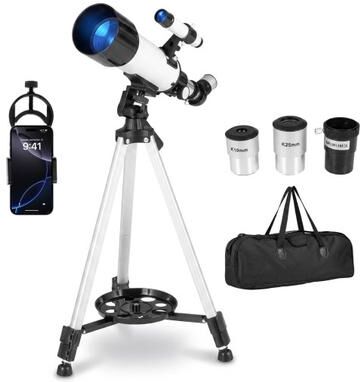
LightInthebox F30070M 70mm Aperture 300mm Astronomical Refractor Astronomical Telescope Tripod Finder Scope- Portable Travel Telescope With TripodModel:F30070; Structures:Astronomical Telescope; Resolution:<=4.0; Magnification:150; Objective Lens:2.2; Field Range:170; Occasion:for Beginners and Advanced Users Kids Adults Astronomy; Eye Lens:20; Field of View:300; Focus System:Central...53,99 $*Shipping: 11,69 $Secure redirect to the provider
-
Make Brilliant Work: Lessons on Creativity, Innovation, and Success by Rod JudkinsDescription. Condition: BRAND NEW. Format: Paperback. Make Brilliant Work is an inspiring guide to unlocking your creative potential, showing you the methods and techniques that will transform your efforts and help you achieve your best ever work.. You don’t have to be brilliant to produce brilliant work. Many of the characters you will meet in this book failed at school, lacked natural talent, were not especially gifted or were repeatedly sacked. But their methods produced brilliant work – and they will work for you, too. Make Brilliant Work is the essential book from Rod Judkins, author of the international bestseller The Art of Creative Thinking.. Whatever your creative endeavour, you might find it hard to produce something significant and important. The real-life heroes in this book will show you how to make the transformation from ordinary to extraordinary. From Frida Kahlo to Steve Jobs, and star architect Zaha Hadid: the figures in Make Brilliant Work will show you how to think for yourself, take risks and persevere to create brilliant work.. Title. Make Brilliant Work: Lessons on Creativity, Innovation, and Success by Rod Judkins. Delivery. Content. Reviews2,49 £*Shipping: 2,99 £Secure redirect to the provider
-
Snug & Styled Kids Handheld Telescope Educational Retractable Focus Science Toy Kids Handheld Telescope Educational Retractable Focus Science ToyWhen curiosity meets play, exploration becomes an exciting everyday adventure for young minds. This kids telescope is designed to inspire discovery, helping children observe the world around them in a fun and educational way. Built as an educational...34,97 $*Shipping: 0,00 $Secure redirect to the provider
-
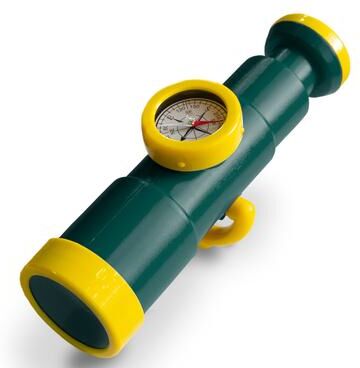
Swing-N-Slide Telescope with Working CompassThe Swing-N-Slide's Telescope with Working Compass and Mounting Bracket offers great fun and enjoyment. It is easy to install and features a simple design with a clear lens at the end for easy viewing.26,67 $*Shipping: 0,00 $Secure redirect to the provider


-
What are the disadvantages of the Galilean telescope compared to the terrestrial telescope or the prism telescope?
The Galilean telescope has a narrower field of view compared to the terrestrial telescope and the prism telescope. This limits the amount of sky that can be observed at one time. Additionally, the Galilean telescope suffers from chromatic aberration, which can cause color fringing around the edges of the observed objects. This is a disadvantage compared to the terrestrial telescope and the prism telescope, which can provide clearer and more accurate images. Finally, the Galilean telescope has a shorter focal length, which can limit its ability to gather light and produce bright images, especially when compared to the terrestrial telescope. **
-
How does the telescope work in Sims Freeplay?
In Sims Freeplay, the telescope allows Sims to stargaze and improve their hobby level in astronomy. Sims can interact with the telescope by tapping on it and selecting the "Stargaze" option. This activity helps Sims earn experience points and progress in the game. Additionally, Sims can also use the telescope to search for UFOs and complete related quests. **
-
How is a simple refracting telescope constructed, such as Kepler's telescope?
A simple refracting telescope, like Kepler's telescope, is constructed using two main components: a convex lens and a concave lens. The convex lens, also known as the objective lens, is placed at the end of the telescope closest to the object being observed. This lens gathers and focuses light rays to form an image. The concave lens, or eyepiece lens, is positioned at the opposite end of the telescope and magnifies the image formed by the objective lens, allowing the viewer to see a larger and clearer image. The two lenses are set at a specific distance from each other to ensure proper magnification and focus. **
-
Which telescope is better?
The answer to which telescope is better depends on the specific needs and preferences of the user. Reflecting telescopes are typically better for viewing fainter objects in the sky due to their larger apertures and better light-gathering capabilities. On the other hand, refracting telescopes are better for viewing planets and other bright objects with high contrast. Ultimately, the best telescope is the one that aligns with the user's observing goals and budget. **

Which lens for telescope?
When choosing a lens for a telescope, it is important to consider factors such as the focal length of the telescope, the desired magnification, and the type of objects you want to observe. A shorter focal length lens will provide higher magnification, while a longer focal length lens will offer a wider field of view. It is also important to choose a lens with good optical quality to ensure clear and sharp images. Ultimately, the best lens for your telescope will depend on your specific observing needs and preferences. **
Which binoculars or telescope?
The choice between binoculars and a telescope depends on your specific needs and preferences. Binoculars are more portable and versatile, making them great for birdwatching, hiking, and other outdoor activities. They also provide a wider field of view, making it easier to locate and track moving objects. On the other hand, telescopes are better for stargazing and observing distant celestial objects, as they offer higher magnification and better light-gathering capabilities. If you're primarily interested in terrestrial viewing and want something portable, go for binoculars. If you're more interested in astronomy and don't mind a larger, less portable device, a telescope may be the better choice. **
Top-Angebote
Products related to Telescope:
-
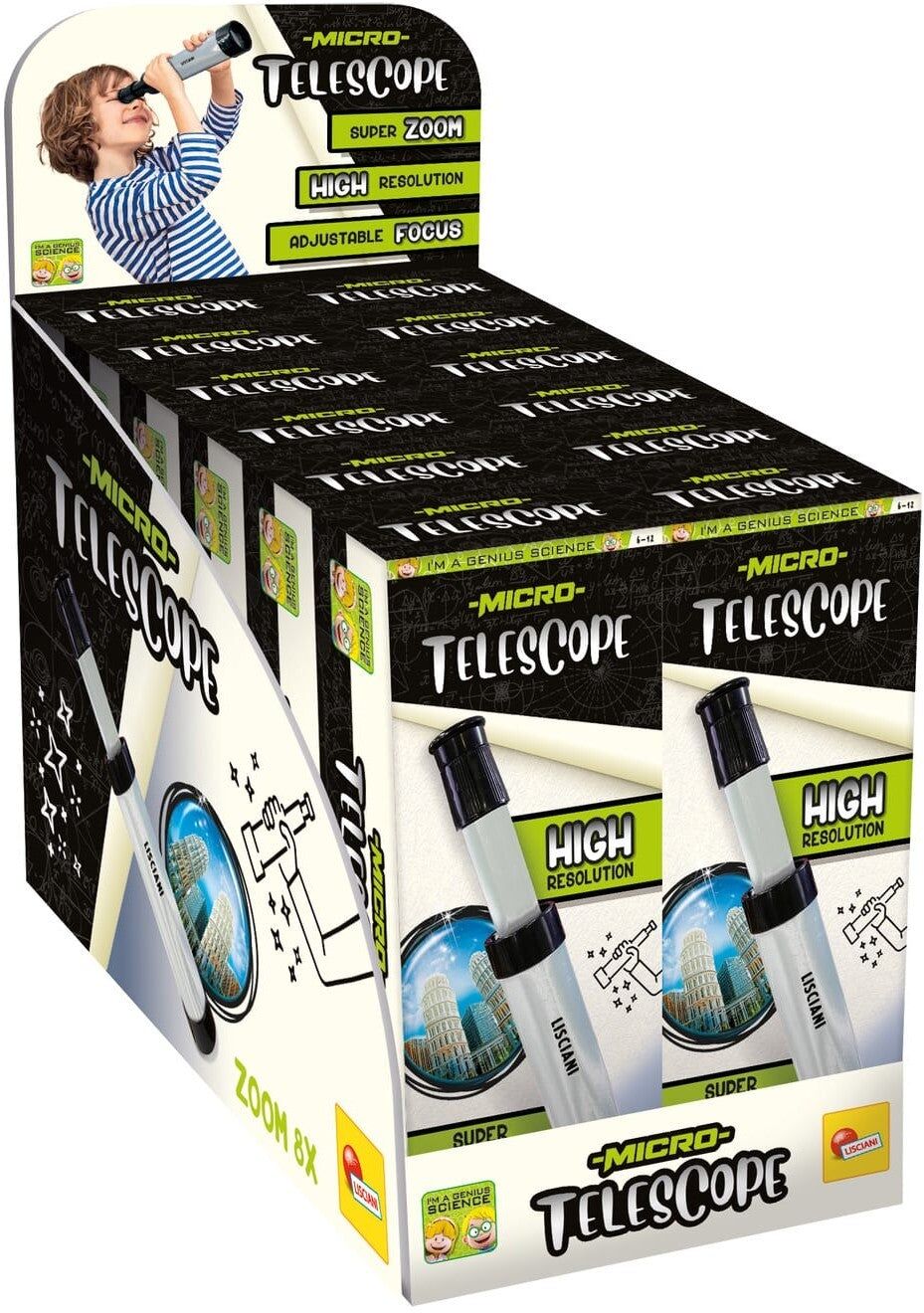
Lisciani I'm A Genius Mini Telescope - Small Lightweight Telescope for KidsIntroduce young curious explorers to the world of astronomy and outdoor science with the Lisciani I'm A Genius Mini Telescope. This compact, lightweight telescope is designed for kids to ask questions and make discoveries about their surroundings. With its portable design, it fits easily in backpacks and pockets, making it perfect for spontaneous adventures. The telescope helps develop observation skills, vocabulary, and scientific thinking as children compare shapes, colors, and movements in real time. Its simple, durable construction ensures safe and enjoyable exploration, while its clear, magnified views of nearby objects, plants, birds, and distant sights make it a great tool for learning.5,99 £*Shipping: 3,95 £Secure redirect to the provider
-
LightInthebox F30070M 70mm Aperture 300mm Astronomical Refractor Astronomical Telescope Tripod Finder Scope- Portable Travel Telescope With TripodModel:F30070; Structures:Astronomical Telescope; Resolution:<=4.0; Magnification:150; Objective Lens:2.2; Field Range:170; Occasion:for Beginners and Advanced Users Kids Adults Astronomy; Eye Lens:20; Field of View:300; Focus System:Central...53,99 $*Shipping: 11,69 $Secure redirect to the provider
-
Make Brilliant Work: Lessons on Creativity, Innovation, and Success by Rod JudkinsDescription. Condition: BRAND NEW. Format: Paperback. Make Brilliant Work is an inspiring guide to unlocking your creative potential, showing you the methods and techniques that will transform your efforts and help you achieve your best ever work.. You don’t have to be brilliant to produce brilliant work. Many of the characters you will meet in this book failed at school, lacked natural talent, were not especially gifted or were repeatedly sacked. But their methods produced brilliant work – and they will work for you, too. Make Brilliant Work is the essential book from Rod Judkins, author of the international bestseller The Art of Creative Thinking.. Whatever your creative endeavour, you might find it hard to produce something significant and important. The real-life heroes in this book will show you how to make the transformation from ordinary to extraordinary. From Frida Kahlo to Steve Jobs, and star architect Zaha Hadid: the figures in Make Brilliant Work will show you how to think for yourself, take risks and persevere to create brilliant work.. Title. Make Brilliant Work: Lessons on Creativity, Innovation, and Success by Rod Judkins. Delivery. Content. Reviews2,49 £*Shipping: 2,99 £Secure redirect to the provider
-
How does a telescope work?
A telescope works by gathering and focusing light from distant objects, such as stars and planets. The primary component of a telescope is the objective lens or mirror, which collects and concentrates the light. This focused light is then magnified by the eyepiece, allowing the viewer to see a larger and clearer image of the object. By using lenses or mirrors to gather and magnify light, telescopes enable us to observe celestial objects that are too faint or distant to be seen with the naked eye. **
-
Telescope or binoculars?
It depends on what you want to use them for. If you are interested in stargazing and observing distant celestial objects, a telescope would be the better choice as it provides higher magnification and better image quality. However, if you are looking for a more versatile and portable option for birdwatching, wildlife observation, or even some stargazing, then binoculars would be the better choice. Ultimately, the decision should be based on your specific needs and interests. **
-
What are the disadvantages of the Galilean telescope compared to the terrestrial telescope or the prism telescope?
The Galilean telescope has a narrower field of view compared to the terrestrial telescope and the prism telescope. This limits the amount of sky that can be observed at one time. Additionally, the Galilean telescope suffers from chromatic aberration, which can cause color fringing around the edges of the observed objects. This is a disadvantage compared to the terrestrial telescope and the prism telescope, which can provide clearer and more accurate images. Finally, the Galilean telescope has a shorter focal length, which can limit its ability to gather light and produce bright images, especially when compared to the terrestrial telescope. **
-
How does the telescope work in Sims Freeplay?
In Sims Freeplay, the telescope allows Sims to stargaze and improve their hobby level in astronomy. Sims can interact with the telescope by tapping on it and selecting the "Stargaze" option. This activity helps Sims earn experience points and progress in the game. Additionally, Sims can also use the telescope to search for UFOs and complete related quests. **
Similar search terms for Telescope
-
Snug & Styled Kids Handheld Telescope Educational Retractable Focus Science Toy Kids Handheld Telescope Educational Retractable Focus Science ToyWhen curiosity meets play, exploration becomes an exciting everyday adventure for young minds. This kids telescope is designed to inspire discovery, helping children observe the world around them in a fun and educational way. Built as an educational...34,97 $*Shipping: 0,00 $Secure redirect to the provider
-
Swing-N-Slide Telescope with Working CompassThe Swing-N-Slide's Telescope with Working Compass and Mounting Bracket offers great fun and enjoyment. It is easy to install and features a simple design with a clear lens at the end for easy viewing.26,67 $*Shipping: 0,00 $Secure redirect to the provider
-
Pan Make Brilliant Work: Lessons on Creativity, Innovation and Success by Rod Judkins - Paperback - Self-Help/Business Creativity Guide, Author ofMake Brilliant Work is an inspiring guide by Rod Judkins, drawing on the real-life stories of visionaries from Frida Kahlo to Steve Jobs. This paperback book reveals the methods and mindsets that turn ordinary effort into extraordinary results. Judkins proves that talent alone never guaranteed success — persistence, risk-taking and original thinking did. A motivating read for anyone wanting to unlock their creative potential at work or in life. The book profiles figures who failed at school, were told they lacked talent, or were fired more than once, yet went on to achieve great things. Written by Rod Judkins, published by Pan Macmillan, this book is a reassuring truth: you don't have to be naturally brilliant to produce brilliant work.2,99 £*Shipping: 2,99 £Secure redirect to the provider
-
How is a simple refracting telescope constructed, such as Kepler's telescope?
A simple refracting telescope, like Kepler's telescope, is constructed using two main components: a convex lens and a concave lens. The convex lens, also known as the objective lens, is placed at the end of the telescope closest to the object being observed. This lens gathers and focuses light rays to form an image. The concave lens, or eyepiece lens, is positioned at the opposite end of the telescope and magnifies the image formed by the objective lens, allowing the viewer to see a larger and clearer image. The two lenses are set at a specific distance from each other to ensure proper magnification and focus. **
-
Which telescope is better?
The answer to which telescope is better depends on the specific needs and preferences of the user. Reflecting telescopes are typically better for viewing fainter objects in the sky due to their larger apertures and better light-gathering capabilities. On the other hand, refracting telescopes are better for viewing planets and other bright objects with high contrast. Ultimately, the best telescope is the one that aligns with the user's observing goals and budget. **
-
Which lens for telescope?
When choosing a lens for a telescope, it is important to consider factors such as the focal length of the telescope, the desired magnification, and the type of objects you want to observe. A shorter focal length lens will provide higher magnification, while a longer focal length lens will offer a wider field of view. It is also important to choose a lens with good optical quality to ensure clear and sharp images. Ultimately, the best lens for your telescope will depend on your specific observing needs and preferences. **
-
Which binoculars or telescope?
The choice between binoculars and a telescope depends on your specific needs and preferences. Binoculars are more portable and versatile, making them great for birdwatching, hiking, and other outdoor activities. They also provide a wider field of view, making it easier to locate and track moving objects. On the other hand, telescopes are better for stargazing and observing distant celestial objects, as they offer higher magnification and better light-gathering capabilities. If you're primarily interested in terrestrial viewing and want something portable, go for binoculars. If you're more interested in astronomy and don't mind a larger, less portable device, a telescope may be the better choice. **
* All prices are inclusive of VAT and, if applicable, plus shipping costs. The offer information is based on the details provided by the respective shop and is updated through automated processes. Real-time updates do not occur, so deviations can occur in individual cases. ** Note: Parts of this content were created by AI.