Buy work-shop.eu ?
We are moving the project
work-shop.eu .
Are you interested in purchasing the domain
work-shop.eu ?
domain@kv-gmbh.de · 0541-91531010
Buy work-shop.eu ?
How does acceleration through gravity work?
Acceleration through gravity is the result of the gravitational force exerted by a massive object, such as the Earth, on another object. When an object is in free fall, the force of gravity causes it to accelerate at a rate of 9.8 meters per second squared (on Earth). This means that for every second an object is in free fall, its velocity increases by 9.8 meters per second. This acceleration is constant and independent of the object's mass, which was famously demonstrated by Galileo when he dropped two different-sized balls from the Leaning Tower of Pisa. **
How can one convert acceleration to Earth acceleration?
To convert acceleration to Earth acceleration, one can use the formula: Earth acceleration = acceleration / 9.81 m/s^2. This formula is derived from the fact that Earth's gravitational acceleration is approximately 9.81 m/s^2. By dividing the given acceleration value by 9.81 m/s^2, one can determine how many times greater or smaller the acceleration is compared to Earth's gravitational acceleration. This conversion is useful for comparing accelerations in different contexts to the standard acceleration due to gravity on Earth. **

Similar search terms for Acceleration
Top-Angebote
Products related to Acceleration:
-
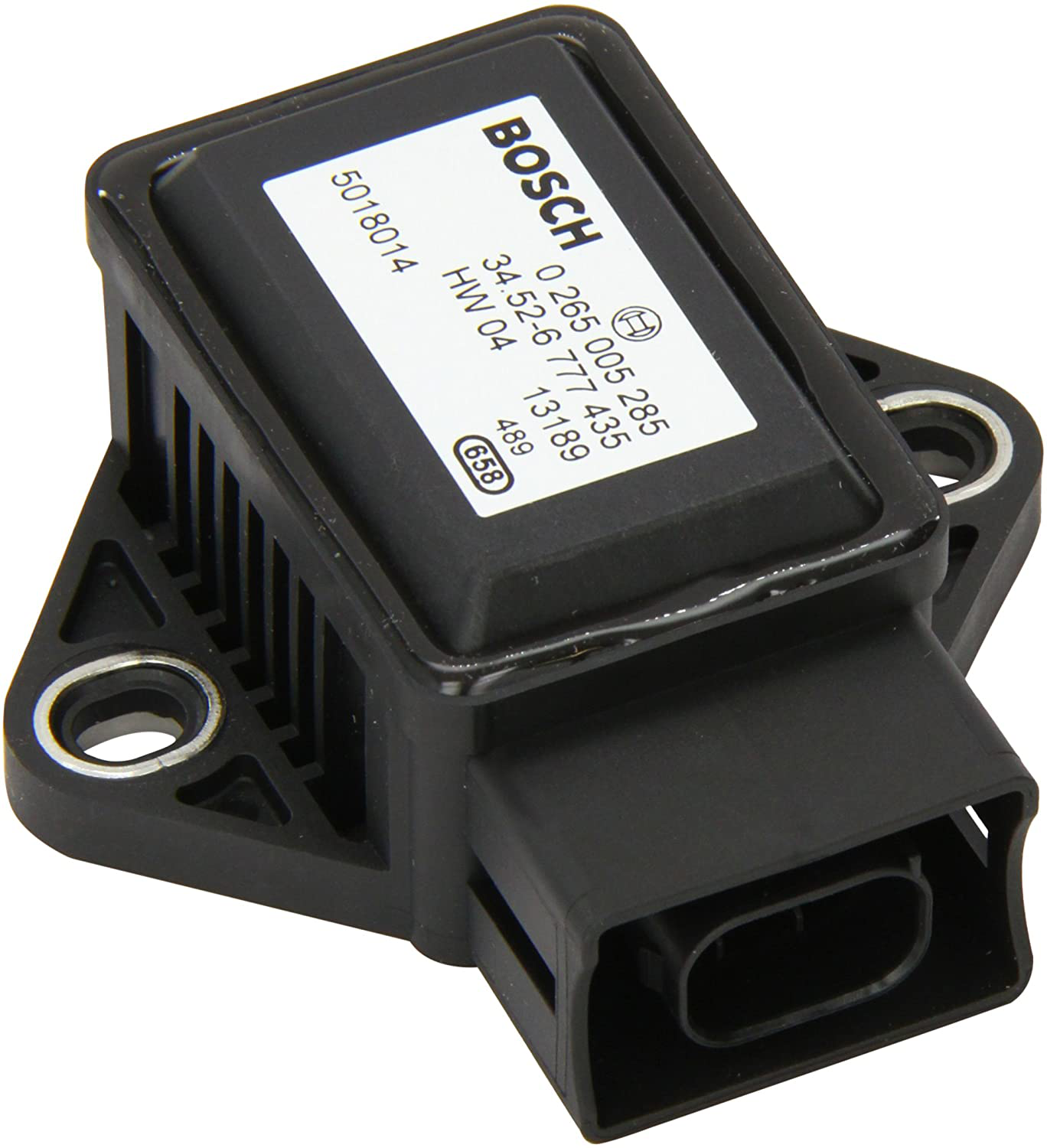
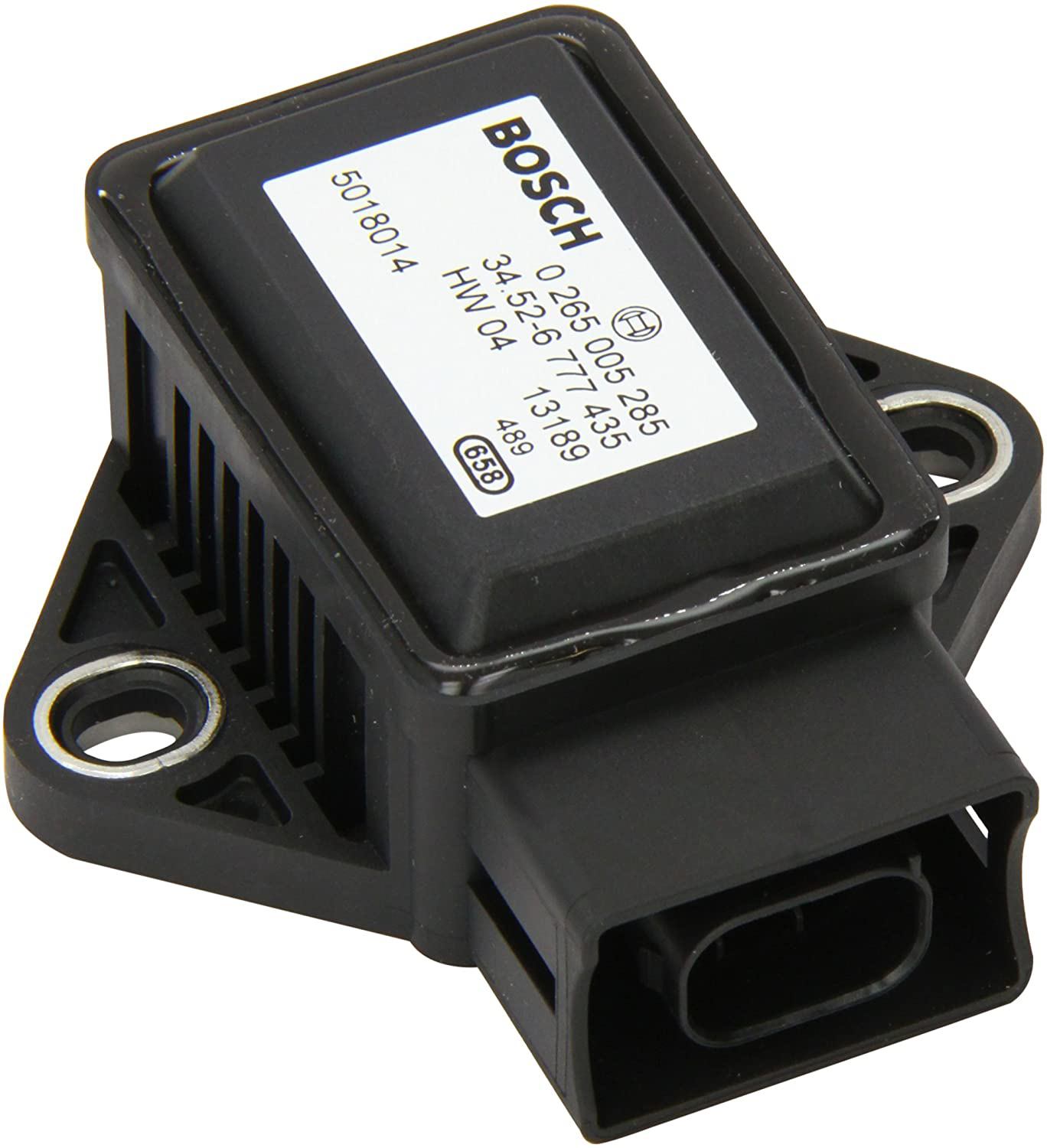
METZGER 09001553 Sensor, longitudinal- / lateral accelerationFitting Position: lateral installation; Fitting Position: C-Pillar, Rear, Front, B-Pillar, Front and Rear; Sensor Type: Crash Sensor; Airbag: for side airbag; Production date from: 26.05.2014, 03.11.2014, 25.05.2015; Number of Doors: 4; for PR number: 4X1, 0A2; Production date to: 03.02.202067,99 £*Shipping: 8,45 £Secure redirect to the provider



-
How can one convert acceleration to Earth's acceleration?
To convert acceleration to Earth's acceleration, one can simply divide the given acceleration by the acceleration due to gravity on Earth, which is approximately 9.81 m/s^2. This will give the acceleration in terms of how many times Earth's gravity it is. For example, if a car is accelerating at 5 m/s^2, dividing this by 9.81 m/s^2 will give approximately 0.51 g, where g represents Earth's acceleration due to gravity. **
-
How does acceleration work in the engine?
Acceleration in an engine is the result of a combination of factors. When the driver presses the accelerator pedal, it opens the throttle valve, allowing more air to enter the engine. The engine control unit then increases the amount of fuel injected into the combustion chamber, creating a more powerful explosion. This increased power output causes the engine to generate more torque, which in turn propels the vehicle forward, resulting in acceleration. Additionally, modern engines may also adjust the timing of the ignition and the valve timing to optimize performance during acceleration. **
-
What is the difference between gravitational acceleration and Earth's acceleration?
Gravitational acceleration is the acceleration experienced by an object due to the force of gravity, which is approximately 9.81 m/s^2 on the surface of the Earth. Earth's acceleration, on the other hand, refers to the acceleration of the Earth itself as it orbits the Sun, which is approximately 9.81 m/s^2 towards the Sun. In essence, gravitational acceleration is the acceleration experienced by objects on Earth due to gravity, while Earth's acceleration is the acceleration of the Earth as it moves through space. **
-
What is the difference between tangential acceleration and rotational acceleration?
Tangential acceleration is the acceleration of an object moving in a circular path, and it is directed along the tangent to the path. It is caused by a change in the object's speed or direction. On the other hand, rotational acceleration is the rate of change of angular velocity of an object rotating around an axis. It is caused by a torque or force acting on the object, and it is directed perpendicular to the plane of rotation. In summary, tangential acceleration is related to linear motion in a circular path, while rotational acceleration is related to the change in the rate of rotation of an object. **


What is the formula for acceleration in uniform acceleration in physics?
The formula for acceleration in uniform acceleration in physics is given by a = (v - u) / t, where a is the acceleration, v is the final velocity, u is the initial velocity, and t is the time taken. This formula represents the change in velocity over time, and it is used to calculate the rate at which an object's velocity is changing. Acceleration is measured in meters per second squared (m/s^2). **
Is acceleration always constant?
No, acceleration is not always constant. Acceleration is the rate of change of velocity, so if an object's velocity is changing at a constant rate, then its acceleration is constant. However, if an object's velocity is changing at a non-constant rate, then its acceleration will also be non-constant. For example, when an object is thrown upwards, its acceleration due to gravity is constant, but when a car is speeding up or slowing down, its acceleration is not constant. **
Top-Angebote
Products related to Acceleration:
-
METZGER 09001552 Sensor, longitudinal- / lateral accelerationFitting Position: lateral installation; Fitting Position: Front and Rear, C-Pillar, Rear, Front; Sensor Type: Crash Sensor; Airbag: for side airbag; for PR number: 4X1, 4X3, 0A2; Production date from: 31.05.2010; Production date to: 26.05.2014, 03.11.2014, 03.02.2020, 01.06.2020, 30.11.2015; Model Year to: 2014; Number of Doors: 4; Vehicle Identification Number (VIN) from: 2K-B-200 00167,99 £*Shipping: 8,45 £Secure redirect to the provider
-
METZGER 09001553 Sensor, longitudinal- / lateral accelerationFitting Position: lateral installation; Fitting Position: C-Pillar, Rear, Front, B-Pillar, Front and Rear; Sensor Type: Crash Sensor; Airbag: for side airbag; Production date from: 26.05.2014, 03.11.2014, 25.05.2015; Number of Doors: 4; for PR number: 4X1, 0A2; Production date to: 03.02.202067,99 £*Shipping: 8,45 £Secure redirect to the provider
-
How does acceleration through gravity work?
Acceleration through gravity is the result of the gravitational force exerted by a massive object, such as the Earth, on another object. When an object is in free fall, the force of gravity causes it to accelerate at a rate of 9.8 meters per second squared (on Earth). This means that for every second an object is in free fall, its velocity increases by 9.8 meters per second. This acceleration is constant and independent of the object's mass, which was famously demonstrated by Galileo when he dropped two different-sized balls from the Leaning Tower of Pisa. **
-
How can one convert acceleration to Earth acceleration?
To convert acceleration to Earth acceleration, one can use the formula: Earth acceleration = acceleration / 9.81 m/s^2. This formula is derived from the fact that Earth's gravitational acceleration is approximately 9.81 m/s^2. By dividing the given acceleration value by 9.81 m/s^2, one can determine how many times greater or smaller the acceleration is compared to Earth's gravitational acceleration. This conversion is useful for comparing accelerations in different contexts to the standard acceleration due to gravity on Earth. **
-
How can one convert acceleration to Earth's acceleration?
To convert acceleration to Earth's acceleration, one can simply divide the given acceleration by the acceleration due to gravity on Earth, which is approximately 9.81 m/s^2. This will give the acceleration in terms of how many times Earth's gravity it is. For example, if a car is accelerating at 5 m/s^2, dividing this by 9.81 m/s^2 will give approximately 0.51 g, where g represents Earth's acceleration due to gravity. **
-
How does acceleration work in the engine?
Acceleration in an engine is the result of a combination of factors. When the driver presses the accelerator pedal, it opens the throttle valve, allowing more air to enter the engine. The engine control unit then increases the amount of fuel injected into the combustion chamber, creating a more powerful explosion. This increased power output causes the engine to generate more torque, which in turn propels the vehicle forward, resulting in acceleration. Additionally, modern engines may also adjust the timing of the ignition and the valve timing to optimize performance during acceleration. **
Similar search terms for Acceleration
-
Pan Make Brilliant Work: Lessons on Creativity, Innovation and Success by Rod Judkins - Paperback - Self-Help/Business Creativity Guide, Author ofMake Brilliant Work is an inspiring guide by Rod Judkins, drawing on the real-life stories of visionaries from Frida Kahlo to Steve Jobs. This paperback book reveals the methods and mindsets that turn ordinary effort into extraordinary results. Judkins proves that talent alone never guaranteed success — persistence, risk-taking and original thinking did. A motivating read for anyone wanting to unlock their creative potential at work or in life. The book profiles figures who failed at school, were told they lacked talent, or were fired more than once, yet went on to achieve great things. Written by Rod Judkins, published by Pan Macmillan, this book is a reassuring truth: you don't have to be naturally brilliant to produce brilliant work.2,99 £*Shipping: 2,99 £Secure redirect to the provider
-
James Zeiger Minecraft Beginner's Guide (21st Century Skills Innovation Library: Unofficial Guides Junior) - Non Fiction - PaperbackTitle:. Minecraft Beginner's Guide Condition: BRAND NEW. Format: Paperback. ISBN: Overview:. Dive into the world of Minecraft with this kid-friendly introduction designed for young builders and curious minds. The Minecraft Beginner's Guide, part of the 21st Century Skills Innovation Library: Unofficial Guides Junior, is crafted for readers who are stepping into blocky worlds for the first time. It explains the game’s core ideas in clear, approachable language, pairing each concept with simple visuals and practical, step-by-step guidance. From gathering resources and crafting essential items to planning safe bases and exploring biomes, the book teaches critical thinking, problem-solving, and creativity in a hands-on way. The paperback format keeps reading light and portable, making it ideal for reading at home, on journeys, or in the classroom. Beyond the how-to, it encourages safe, responsible gaming and helps young players build confidence as they experiment and iterate. This is not just a manual; it’s a springboard for independent play, storytelling in a sandbox environment, and the thrill of turning ideas into buildable, shareable worlds. A thoughtful gift for budding coders and creative minds alike, it channels Minecraft’s excitement into tangible, real-world skills. What Makes This Book Stand Out:. What sets this Minecraft beginner’s guide apart is its careful balance of accessibility and depth. Written for younger readers, it uses friendly, age-appropriate language and concise explanations that demystify complex ideas without talking down to the reader. The layout emphasises clear steps, quick win moments, and visual cues that reinforce learning by doing. Readers don’t just memorize recipes; they learn problem-solving strategies, planning, and experimentation—skills that transfer beyond the game. The inclusion of safe gaming guidance aligns with parents’ and teachers’ expectations for younger players, making it a reliable tool for independent reading, guided gaming sessions, or classroom activities. This book is genuinely engaging, turning browser curiosity into confident, curious builders who can imagine, design, and execute their own Minecraft projects. Who This Book Is Perfect For:. This book is ideal for children aged roughly 8–12 who are new to Minecraft or want a clear, structured start. It also serves as a practical resource for parents seeking kid-friendly explanations, for teachers looking to integrate digital literacy into lessons, and for gift buyers searching for an engaging STEM-inspired present. Perfect for early readers who enjoy visuals, short chapters, and actionable steps, it supports growing independence and safe play habits. Whether a family reads together or a classroom uses it as a mini-curriculum, this guide makes Minecraft approachable and enjoyable from page one. Key Highlights:. Clear, beginner-friendly explanations tailored to younger readers. Step-by-step guidance paired with friendly visuals. Focus on planning,...10,82 £*Shipping: 2,99 £Secure redirect to the provider
-
What is the difference between gravitational acceleration and Earth's acceleration?
Gravitational acceleration is the acceleration experienced by an object due to the force of gravity, which is approximately 9.81 m/s^2 on the surface of the Earth. Earth's acceleration, on the other hand, refers to the acceleration of the Earth itself as it orbits the Sun, which is approximately 9.81 m/s^2 towards the Sun. In essence, gravitational acceleration is the acceleration experienced by objects on Earth due to gravity, while Earth's acceleration is the acceleration of the Earth as it moves through space. **
-
What is the difference between tangential acceleration and rotational acceleration?
Tangential acceleration is the acceleration of an object moving in a circular path, and it is directed along the tangent to the path. It is caused by a change in the object's speed or direction. On the other hand, rotational acceleration is the rate of change of angular velocity of an object rotating around an axis. It is caused by a torque or force acting on the object, and it is directed perpendicular to the plane of rotation. In summary, tangential acceleration is related to linear motion in a circular path, while rotational acceleration is related to the change in the rate of rotation of an object. **
-
What is the formula for acceleration in uniform acceleration in physics?
The formula for acceleration in uniform acceleration in physics is given by a = (v - u) / t, where a is the acceleration, v is the final velocity, u is the initial velocity, and t is the time taken. This formula represents the change in velocity over time, and it is used to calculate the rate at which an object's velocity is changing. Acceleration is measured in meters per second squared (m/s^2). **
-
Is acceleration always constant?
No, acceleration is not always constant. Acceleration is the rate of change of velocity, so if an object's velocity is changing at a constant rate, then its acceleration is constant. However, if an object's velocity is changing at a non-constant rate, then its acceleration will also be non-constant. For example, when an object is thrown upwards, its acceleration due to gravity is constant, but when a car is speeding up or slowing down, its acceleration is not constant. **
* All prices are inclusive of VAT and, if applicable, plus shipping costs. The offer information is based on the details provided by the respective shop and is updated through automated processes. Real-time updates do not occur, so deviations can occur in individual cases. ** Note: Parts of this content were created by AI.